

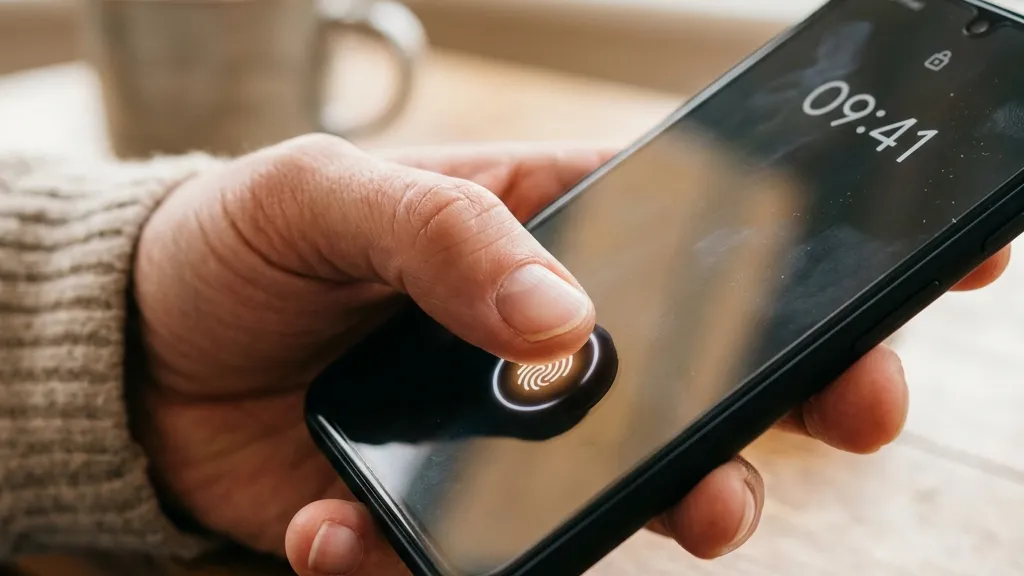
It’s the ultimate security showdown: The uniqueness of your body vs. the secrecy of your mind.
We all love the magic of glancing at our phone and watching it unlock instantly. But when it comes to securing our most sensitive data, is a fingerprint really better than a 25-character master password?
Let’s break it down.
👁️ The Case for Biometrics
Biometrics (like Face ID and Touch ID) are the undisputed kings of convenience.
- Shoulder-Surf Proof: No one can steal your password by watching you type it on the subway.
- Hardware Secured: On modern devices, your fingerprint isn’t an image file—it’s a mathematical representation locked inside a secure hardware chip. It never leaves your device.
But there’s a catch… You can’t change your face. If a biometric dataset were somehow compromised, you can’t just hit “reset password.”
🧠 The Case for Passwords
The humble password has one massive advantage: Revocability. If someone guesses your password, you change it. Simple as that. Furthermore, in many legal jurisdictions, you can be compelled by law enforcement to unlock a phone with your thumb, but a memorized passcode is protected as “knowledge.”
🤝 Why Not Both?
The truth is, forcing a choice between the two is a false dichotomy. The strongest security systems use both.
This is exactly how KeysBook operates:
- The Foundation: Your vault is encrypted using a master PIN/Password. This is the underlying cryptographic key.
- The Gateway: For daily, frictionless access, KeysBook integrates with your device’s biometric sensors to unlock that underlying key.
You get the un-phishable convenience of a fingerprint, backed by the cryptographic certainty of a master password. It’s not a compromise; it’s a fortress.